
Britain's AI Minister, Kanishka Narayan, issued a strong warning on Monday about the growing risks posed by artificial intelligence to cyber defences. He highlighted the potential for serious consequences from autonomous AI systems and announced new government measures, including a 'National Cyber Action Plan', to bolster the UK's resilience against cyber-attacks.
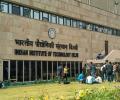
Researchers at IIT Delhi have successfully designed India's first working indigenous micro Graphics Processing Unit (GPU). This significant development aims to reduce the country's reliance on imported GPUs, which are crucial for AI, Machine Learning, and various embedded applications, and could help bridge the digital divide.
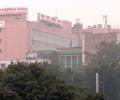
Specialists at AIIMS, Delhi, affirm that robot-assisted procedures significantly improve difficult gallbladder operations by offering enhanced visualisation and instrument control. This technology aids in navigating complex cases involving severe inflammation and unexpected anatomy, and is seen as the next evolutionary step in surgical techniques, potentially phasing out conventional laparoscopy.

Robotic surgery is poised to transform healthcare in Delhi, expanding access to specialised expertise through the Indian-developed SSI Mantra system. Delhi is emerging as a hub for advanced surgical care, with successful implementations at Rajiv Gandhi Cancer Institute, including pioneering telesurgery. This technology aims to make robotic surgery more accessible and sustainable, fostering an ecosystem for training and innovation.

An Indian-origin engineer couple, Anuradha and Vikas Sinha, have donated $20 million to the University of North Texas (UNT) to establish the Anuradha and Vikas Sinha College of Artificial Intelligence and Advanced Analytics. This significant gift aims to create new opportunities for students and faculty, focusing on building and deploying intelligent systems and understanding their operation within human contexts. The donation underscores the couple's belief in education and immigrant contributions to the American dream, supporting leadership, scholarships, professorships, research, and entrepreneurship.
Graphite electrode maker TACC has signed an initial agreement with the Institute for Functional Intelligent Materials to collaborate in the fields of advanced materials science, nanotechnology, and related disciplines.

The Chintan Shivir is expected to discuss the progress of government schemes, policy implementation, time management, inter-ministerial coordination, and public service delivery, among others.

The parents of IIT Bombay student Sahil Wakode, who allegedly died by suicide, have begun a hunger strike demanding action against those they accuse of tormenting their son due to caste discrimination. The institute has deferred mid-semester examinations and reissued an apology for an earlier statement regarding the circumstances of his death.
NIT Rourkela has announced the launch of four new academic programmes for the 2026-27 session, focusing on emerging technologies such as semiconductors, artificial intelligence, and quantum technologies.

rediffGURU Radheshyam Zanwar, founder of Zanwar Classes, clarifies doubts and guides young aspirants on eligibility for science, and engineering entrance exams.

There is no answer to the question of how IN-SPACe invited EOIs for ISRO's mature rockets and whether it was based on any government policy decision.
Minister of State for Telecom Chandra Sekhar Pemmasani urged BRICS nations to collaborate on building institutional capacity and advocating for fair standards in international telecom and ICT bodies. He highlighted India's willingness to share its modular, open-source digital public infrastructure frameworks like Aadhaar and DigiLocker, emphasising their role in sustainable development and economic growth across the Global South.

Microsoft has inaugurated its India South Central data centre region in Telangana, marking its fourth cloud region in the country and significantly expanding its cloud and AI infrastructure. This strategic investment supports Telangana's ambitious goal of achieving 5 GW of data centre capacity by 2029 and attracting USD 30 billion in digital infrastructure investments, further solidifying Hyderabad's role as a global technology hub.
Microsoft has inaugurated its India South Central data centre region in Telangana, marking its fourth cloud region in the country and significantly expanding its cloud and AI infrastructure. This strategic investment supports Telangana's ambitious goal of achieving 5 GW of data centre capacity by 2029 and attracting USD 30 billion in digital infrastructure investments, further solidifying Hyderabad's role as a global technology hub.
NVIDIA has acquired AI startup Hugging Face for USD 12.9 billion, aiming to scale its platform, strengthen infrastructure, and expand access to AI for developers and institutions worldwide while maintaining an open ecosystem.
Deloitte India has partnered with IIT Bombay to launch a Quantum Technology Centre, aiming to accelerate quantum adoption, research, and enterprise use-cases for Indian businesses.

The Supreme Court has directed the Centre to submit an affidavit detailing the steps taken to implement the recommendations of the Radhakrishnan panel and the Nandan Nilekani committee for institutionalising reforms in the National Testing Agency (NTA) and improving NEET exam processes.
NVIDIA has acquired AI startup Hugging Face for USD 12.9 billion, aiming to scale its platform, strengthen infrastructure, and expand AI access for developers and institutions globally while maintaining an open ecosystem.

Climate scientist Tapio Schneider advocates for expanding early warning systems beyond rainfall events to include other disaster triggers like flash floods, citing the recent Nepal floods. He highlights the inevitability of 1.5 degrees Celsius global warming and discusses the role of advanced climate modelling and AI in improving predictions and research, particularly for regions like India.
Researchers from IIT Guwahati and BHU have devised an eco-friendly biological method to treat textile wastewater, specifically targeting toxic azo dyes. Their novel bacterium, 'Brevundimonas sp. AJZ05', effectively degrades 98.50 per cent of Direct Blue-6 dye, producing non-toxic byproducts, offering a sustainable alternative to conventional chemical treatments.

The Kerala Crime Branch has arrested Raveendran Nair, former caretaker of Jayamadhavan Nair, for his murder nine years ago. The investigation, initially treated as an unnatural death, gained momentum through forensic evidence, contradictory statements, and a forged will, leading to the unravelling of a property dispute motive.
Two IIT Gandhinagar students have developed "TrustGate," an AI-based cybersecurity system designed to protect critical infrastructure like water treatment plants and power grids. The system uniquely combines network traffic and physical sensor data to detect sophisticated cyber attacks, identify affected equipment, and provide real-time alerts to operators, earning them an international award.
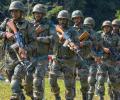
A college student from Hamirpur has received a Rs 3.5-crore grant from the Ministry of Defence for developing an advanced drone capable of evading enemy radar and resisting jamming, aimed at enhancing border surveillance for the Indian Army.
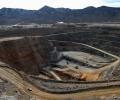
Union Mines Minister G Kishan Reddy announced that the Indian government is intensifying its support for private mining entrepreneurs seeking critical mineral opportunities abroad, working with the Ministry of External Affairs and appointing mineral officers in embassies to facilitate these efforts.
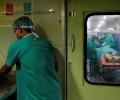
Prof Ajit Kumar Chaturvedi, Vice-Chancellor of Banaras Hindu University, highlighted Artificial Intelligence's transformative potential in healthcare, emphasising its role in augmenting doctors' capabilities and enhancing efficiency. Speaking at PGIMER's Foundation Day, he stressed the need for India to develop AI solutions tailored to its unique healthcare realities, moving beyond being a mere consumer of Western-trained systems. PGIMER Director Vivek Lal also detailed the institute's expansion and commitment to affordable healthcare.
India is making a significant push to establish itself as a global semiconductor manufacturing hub, driven by strategic investments and policy support. The upcoming SEMICON India 2026 event will showcase the country's advancements and ambitions in this critical industry, which underpins virtually all modern electronic devices and has faced global supply chain vulnerabilities.

'It is to observe the Sun continuously that you have the Aditya L1 mission.' 'It is in a position from where it can observe the Sun continuously.'

Indian benchmark equity indices, Sensex and Nifty, rebounded in early trade after a three-day slide, driven by strong buying in blue-chip bank stocks and a firm trend in global markets, supported by easing US bond yields and record foreign-currency deposit inflows.

'While the population remains relatively young, its age structure is beginning to shift, setting the stage for a much older population later this century.'

The benchmark BSE Sensex rebounded by 362 points, ending a four-day losing streak, driven by strong buying in metal, private banking, and oil and gas shares, while the broader NSE Nifty saw modest gains despite paring some advances in the closing session.
Telecom industry body COAI and the British High Commission signed an MoU to boost cooperation in AI, connectivity, and digital trust, fostering responsible tech innovation. The pact, signed at the CO.AI 2026 event, focused on AI's role in intelligent networks, security, and public services. Discussions highlighted AI's importance in combating fraud, improving network efficiency, and ensuring secure digital services. TRAI Chairman Anil Kumar Lahoti and Acting British High Commissioner Ben Mellor emphasised the need for balanced governance and international collaboration to ensure secure, inclusive, and responsible digital transformation.

The larger question raised by the associations is simple: If ISRO is no longer to manufacture launch vehicles, what will happen to the institution's accumulated capabilities and the people who built them?

'Uranium supply is going to come under increasing pressure.'
Uttar Pradesh Governor Anandiben Patel addressed AI Manthan 2.0, advocating for the comprehensive integration of Artificial Intelligence across all university subjects rather than as a standalone course. She urged universities to develop clear, time-bound AI roadmaps covering education, research, healthcare, and agriculture, emphasising indigenous AI development, employment creation, and the importance of "Safe and Trusted AI." The event also saw the formation of an AI Policy Advisory Group and an AI Implementation Group to drive these initiatives.

Chief Justice of India Surya Kant stated that while artificial intelligence (AI) can augment judicial reasoning, it cannot substitute judicial conscience, and a permanent apex body is proposed to supervise AI adoption and accountability within the judiciary.

Researchers have discovered a method to externally manipulate a cell's automatic waste clearance process, known as autophagy. This breakthrough, involving the protein LC3, could offer new therapeutic targets for diseases like cancer and Parkinson's, where cellular cleansing mechanisms are often impaired.
Experts at AI Manthan 2.0 in Kanpur stressed the need for Artificial Intelligence to be customised for India's specific requirements in education, healthcare, agriculture, and governance. Discussions highlighted the development of local language models, AI solutions for farmers like crop loss assessment and a single-window platform, and AI's role in healthcare for diagnosis and reducing doctors' workload, all while ensuring data privacy through federated learning.

BRICS Sports Ministers adopted a Joint Declaration in Visakhapatnam, reaffirming their commitment to strengthen sports cooperation through dialogue and mutual respect. The meeting, held under India's 2026 Chairship, saw Union Minister Dr. Mansukh Mandaviya call for a BRICS Sporting Partnership and introduce three key initiatives: a Working Group on Sports Technology, a Sports Manufacturing Conclave in Udaipur, and Traditional and Indigenous Sports Demonstration Games in Ahmedabad in 2026.

Quantum computing is set to redefine artificial intelligence, cybersecurity, and scientific discovery, promising unprecedented speeds and capabilities while also necessitating urgent development of quantum-safe security measures and strategic enterprise readiness, says Sunil Varghese.

J R D Tata, chairman of the Tata group from 1938 to 1991, said that whenever he had to make a difficult decision, he would ask himself, what will be good for India, and what will be good for the Tatas. If he had a doubt, he would decide in favour of India. In the long run, it would turn out well for the Tatas too, he said, points out Arun Maira.
